Deck Repair in Virginia Beach: Signs It Cannot Wait
September 14, 2026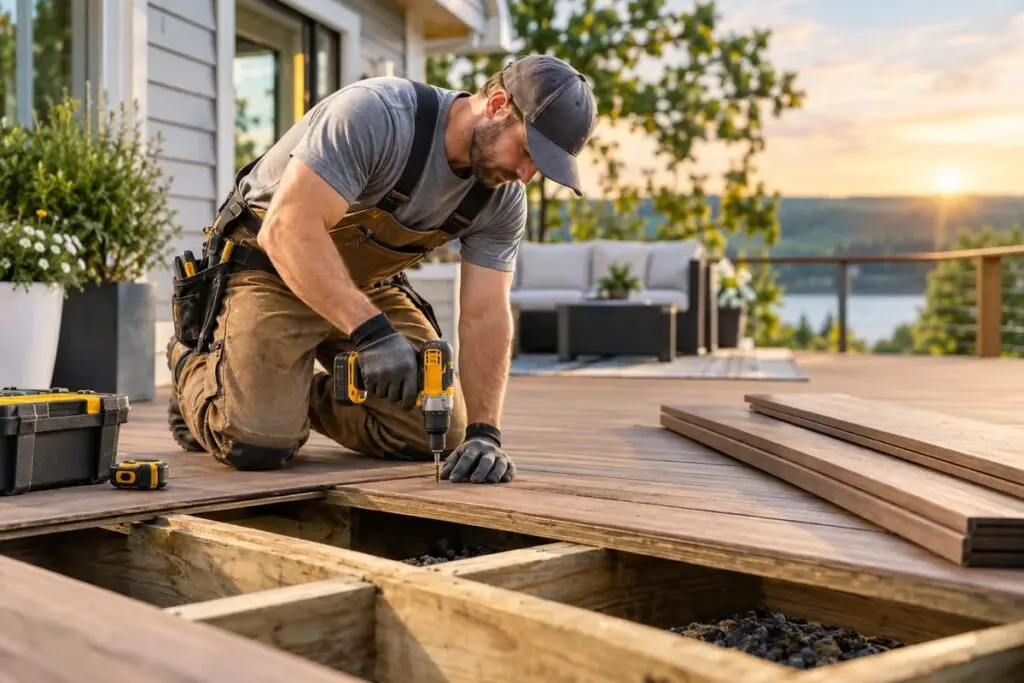
When deck repair near me becomes the right call
We treat soft spots, loose railings, bouncy stairs, and boards that lift at the edges as more than cosmetic issues. Those are the moments when a deck repair search stops being a maybe and becomes a safety check.
If the deck sits above grade, a loose guardrail or shaky stair run is especially important. Those are the places where a small defect turns into a real fall risk, so we look there before we worry about surface wear.
The highest-risk problems are the ones that affect the walking surface, guardrails, or the connection to the house. If we find a moving post, a loose ledger, or stairs that flex under normal use, we treat that as a safety-first repair, not a visual touch-up.
Visible staining, rusted fasteners, and water pooling in the same area after rain often point to hidden damage. In local deck repair work, those clues usually mean the deck needs a closer look for rot, corrosion, or frame movement before the next season makes the failure larger.
How a deck repair service figures out what failed
We start with the deck boards, then work down to the joists, posts, railings, stairs, flashing, and hardware. That order matters because the problem on top is often a symptom of something failing below.
Our deck repair specialist separates surface wear from structural damage by checking where moisture is trapped and where wood has softened, split, or shifted. Hidden rot under boards or behind trim can look minor from above and still need real structural repair.
We also check fastener heads, flashing at the house, and any area where boards have cupped or separated. Those details tell us whether the damage is isolated or part of a water problem that has already spread into the framing.
By the end of the inspection, you should know what we can repair now and what needs follow-up. If you want that kind of clarity before work starts, Mike & Blake’s Decks, Fences offers free estimates and a free consultation/inspection.
What the first inspection usually covers
The visit should follow a simple flow: inspect, document, explain options, price the work, then complete the repair and cleanup. A solid estimate should spell out labor, materials, fasteners, disposal, and any safety fixes that go with the main job.
A reliable deck repair contractor will also point out code concerns or structural issues before we start. That saves you from approving a patch that still leaves a loose rail or a failing stair tread in place.
Fixes a deck repair contractor can often finish in one visit
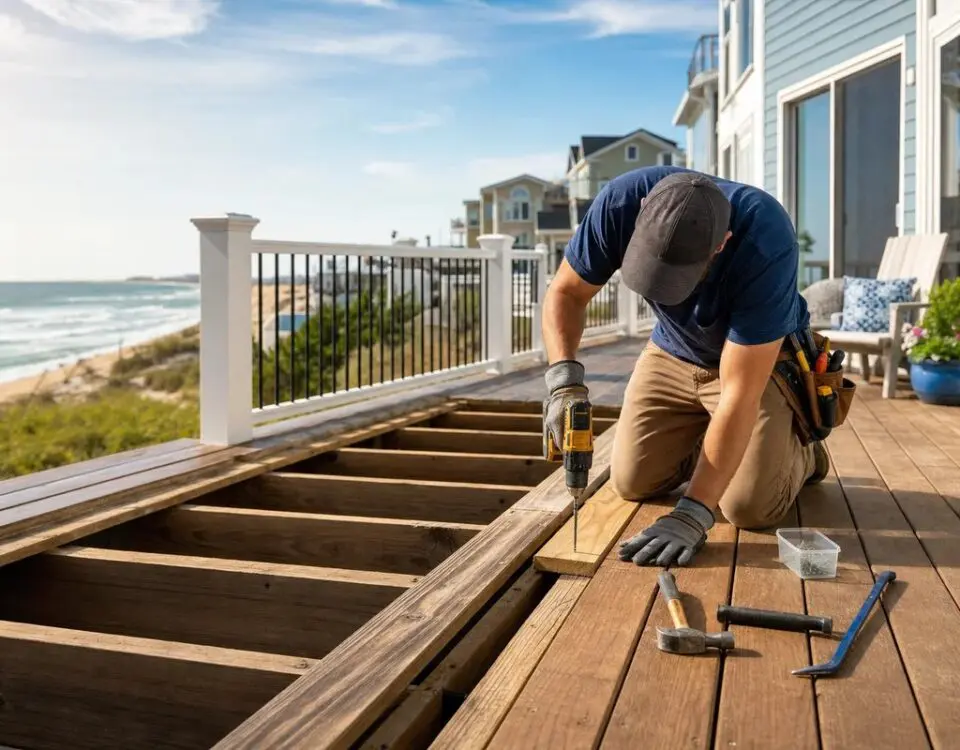
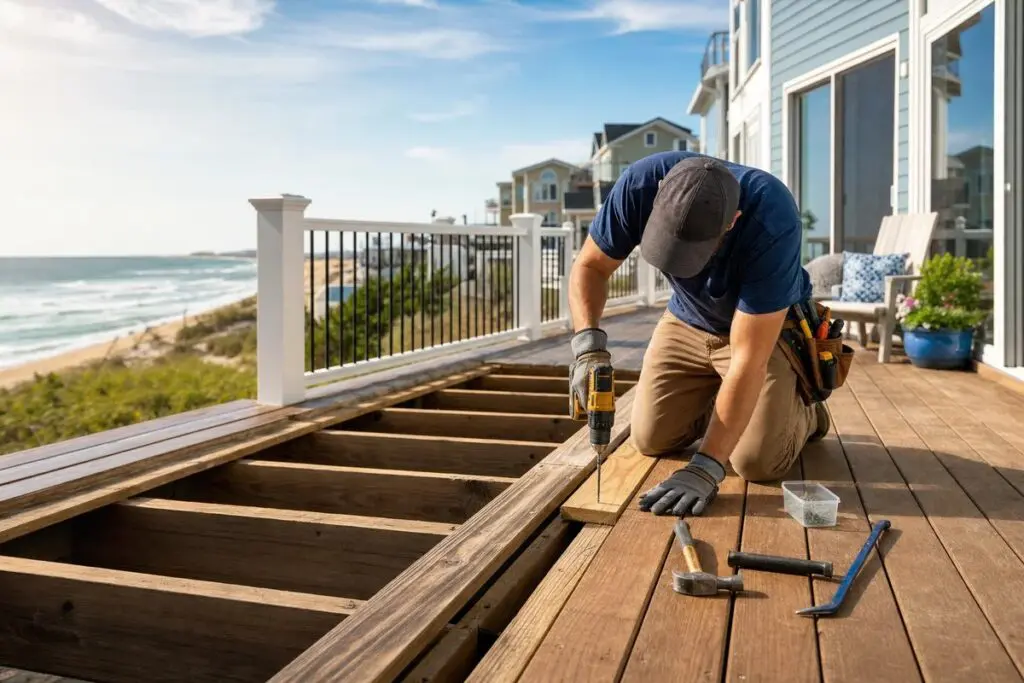
One-visit repairs usually stay in a small area and leave the frame intact. We can often replace damaged boards, tighten rail sections, reset loose stairs, or swap rusted brackets without turning the job into a rebuild.
- Single or small groups of cracked or rotted deck boards
- Loose railing sections and balusters
- Stairs that have shifted but still have sound stringers
- Corroded brackets, screws, or connectors
Material matching matters, especially with older lumber or faded composite decking. A close match in color, grain, and profile helps keep the repair small, while a poor match can make the patch stand out more than the damage did.
These repairs work best when the frame is still sound and the damage is limited to a few visible problem areas. When that is the case, a deck repair company can usually keep the fix targeted instead of spreading it across the whole structure.
Repair or replace when the frame tells the story
Repair makes sense when the damage is isolated, the structure is stable, and the issue is limited to boards, stairs, or a small railing section. Replacement starts to make more sense when rot spreads through several spots or water keeps finding the same entry point.
Our deck repair specialist usually steers toward replacement when the ledger, posts, or several joists are compromised. Patching those areas can leave the deck unsafe, and it does not solve the moisture problem that caused the failure.
If the surface is tired but the frame is sound, repair is the right move. If you are seeing repeated leaks, soft framing, or damage in more than one load-bearing member, replacement is the safer long-term call.
What changes the price of local deck repair
Damage severity is the biggest price driver, followed by material type, hidden framing problems, access to the deck, and any permit or code-related work. A repair on a low, open deck is usually simpler than one that needs stair work, railing changes, or tight access under the structure.
A lower quote can be misleading if it leaves out structural fixes, matching materials, or corroded hardware that should be replaced at the same time. Those omissions can turn a cheap patch into a second repair later.
If you are comparing bids from a deck repair company, ask for a written scope so the estimates are easy to compare on more than the bottom-line number. We do that upfront, and Mike & Blake’s Decks, Fences can also walk you through financing options when a larger repair needs a little more planning.
Questions before you book deck repair near me
If you notice soft spots, loose rails, water stains, or rusted connectors, schedule an inspection before the issue spreads. A small fix is one board or one loose fastener, while anything involving the frame needs a pro.
When should I call a deck repair contractor instead of patching it myself?
Call a pro when the problem involves the ledger, posts, stairs, or guardrails, because those parts affect safety. Any spongy walking surface, moving rail, or visible rot around structural connectors is a clear cutoff for DIY patching.
Can a deck repair service match old boards or composite decking?
Yes, a repair crew can often match old boards or composite decking, but exact matches depend on age, fading, and whether the product is still made. Sun fade, discontinued profiles, and grain differences are the main reasons a clean transition point or a larger replacement section works better.
What would make a deck repair specialist recommend replacement?
Widespread rot, repeated water intrusion, or failing support members are the biggest reasons a specialist recommends replacement. If multiple framing members are compromised or the ledger shows long-term moisture damage, patching stops being the smart fix.
Do I need a permit for local deck repair?
Many cosmetic fixes do not need a permit, but structural changes, stair rebuilds, rail work, or ledger repairs often do. If the repair changes load-bearing parts or the deck layout, check local rules before work starts.
If your deck has any soft spots, loose rails, or visible rot, schedule an inspection now so we can tell you whether repair or replacement is the safer move. You can start with a free consultation/inspection through Mike & Blake’s Decks, Fences, and we will give you a clear scope before any work begins.